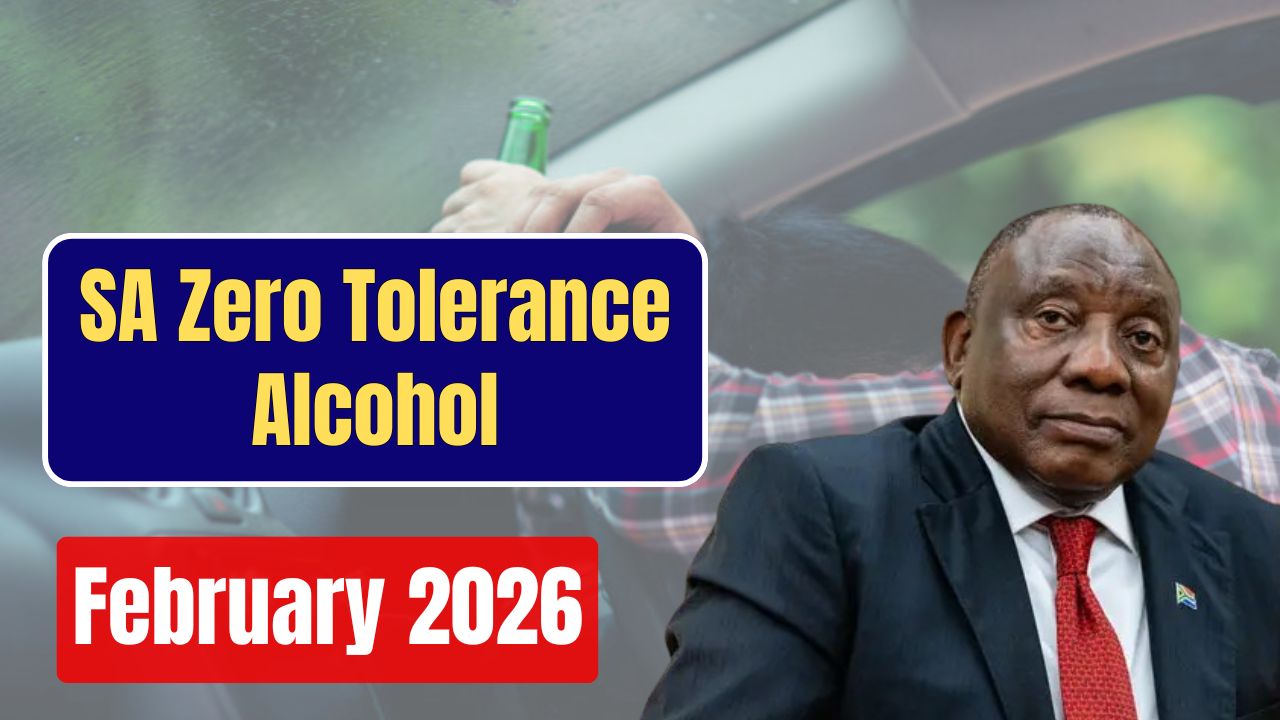
In 2026, South Africans are going to witness some groundbreaking changes in the law, as the government confirms giving drivers the 0-drink driving limit and revising enforcement laws on roads. The objective here is to minimize road accidents and discourage drivers from getting behind the wheel of a vehicle whilst drinking.
In this system, it would mean if a driver has alcohol above the zero limit threshold, even if it is minuscule, then there would be bound to be punishment. A complete turnaround, given the previous limit, and along the path, to sterner measures for individuals driving under the influence.
Zero Alcohol – What this means
Drivers are explicitly not allowed to have any alcohol at all going through their veins while driving under the new regulations. The zero-alcohol policiy applies to all drivers, i.e., private, public transport bus-driver, and learner categories.

Stiffer Penalties for Violating Traffic Rules
The amended traffic laws, which increase the harshness and stringency of punitive measures being adopted for a myriad of offences, with speeding, reckless driving, and DUIs, pass sanctions like increased fines, extensions in license suspension or revocation, or criminal charges for repeat offences, will get a grip on the situation as legislations and by-laws dealing with bad behavior in the same act are encouraged.
Equipped for Acting
Equipped with sophisticated tools and technologies, traffic enforcement bodies are to enforce the new regulations. For instance, road checks, mobile checkpoints, and ordinary monitoring are spreading broadly in highways, urban roads, and high-risk zones. Inhibiting violations as per the former series of reactive measures is the essence of operation of the enforcement effort within an extended enforcement landscape.

Impact on Commercial and Professional Drivers
Because professional drivers, whether working taxis, buses, or freight vehicles, are regarded as being safe and responsible drivers who have operated with passengers and other road users, they will be obliged to drive under the zero alcohol limit as in response to new compliance measures. It is advised that employers in the transport sector ensure that these drivers become acquainted with the new regulations and strictly adhere to them to avoid consequences on the licenses both for individuals and company operations.
Preparing the Drivers
The management recommends that the drivers get ready for possible practice of the new rules even before getting to the rules of the land. That is the only way. Where the laws are about being cautious in ensuring one does not appear inebriated pro to taking the first wheel, updating fines and penalties inscribed in the current legislation; and lastly, giving an understanding of the fundamentals of testing procedures on the road. Public driver education along with safe-driving classes are expected to facilitate an easier transition in adjusting and compliance.

Readiness Definition as at Implementation and Popular Opinion
Public opinion regarding the announcement of the zero‑alcohol limit and other associated changes pertaining to the traffic laws has been mixed. Owing to the potential reduction in drunk- driving crashes, the proposed changes have been warmly embraced by the road safety advocates. However, some road users have brought up the argument of personal liberty and have questioned for the fine print.
Implication for Road Safety
If the rules are strictly implemented, there are hopes that accidents, injuries, and fatalities will indeed decrease. Studies from countries with zero-alcohol limits OP have revealed declines in drunk-draven traffic incidents, something that South Africa aims to replicate by educating its people and enforcing the rules.

Transition and Support for Compliance
The process of moving to harsher penalties is stated to be associated with a grace period where first‑time minor nosebleeds are fined only after having received a warning in advance. Public education campaigns and signage updates and partnerships with civil society groups would endeavor to ensure compliance with the new policy by the time roads reopen in 2026.
Future Prospects for Bona Fide Drivers
In essence, the changes to the 2026 traffic legislation drastically alter the paradigm of how road safety is legislated in South Africa. By generating a regime in which driving safety is first and foremost, it is hoped that the zero alcohol limit law together with stricter penalties for dangerous practices would help reconfigure the character of driving in South Africa and really put driving safety ahead of everything else, relieving extra strain on emergency services and becoming life-saving.