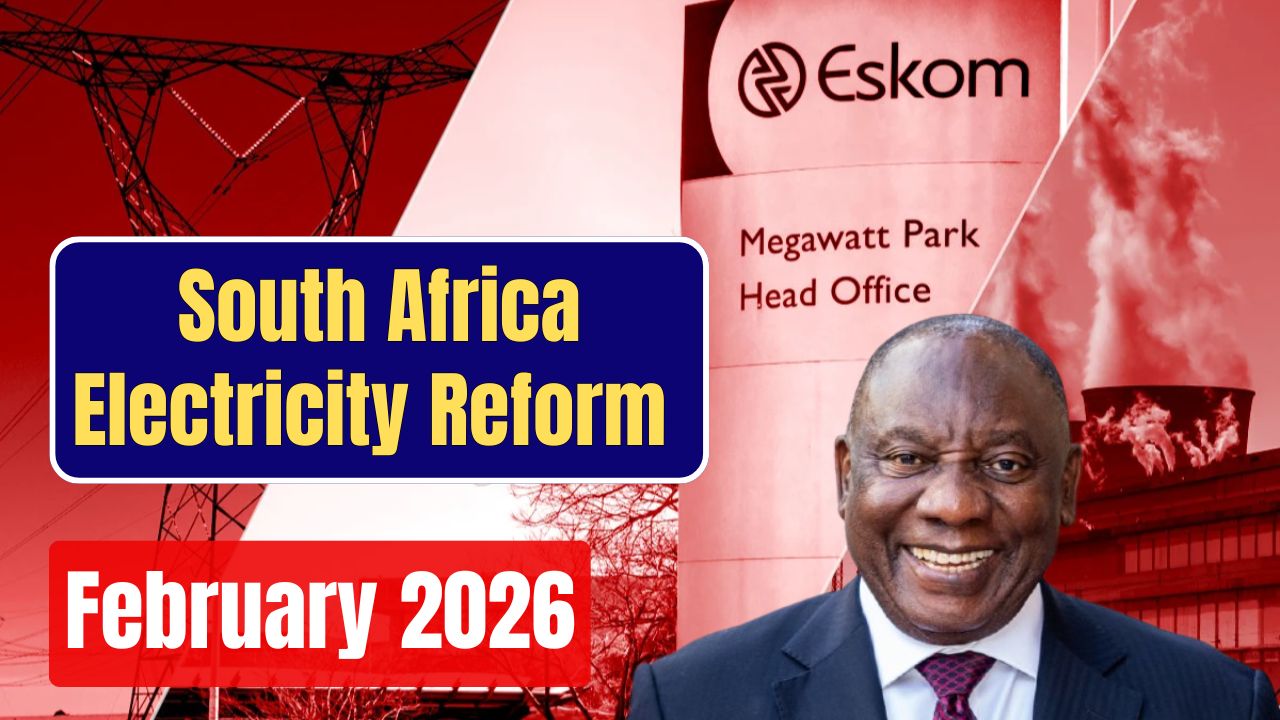
The South African electricity sector will enter a significant transitional period during 2026 when power generation and distribution will undergo comprehensive regulatory transformations. The changes aim to establish consistent electricity delivery while promoting market competition and decreasing the ongoing financial burden that consumers experience from persistent price increases and power outages.
Why Electricity Reform Was Introduced in 2026
The reform agenda follows prolonged load shedding, infrastructure strain, and financial challenges within the national power system. The authorities determined that the electricity market required fundamental changes after they found the current single-buyer system had become unworkable.
Separation of Power Generation and Distribution
The most important reform establishes clear boundaries between electricity generation and transmission and distribution operations. The new system will enhance operational visibility while reducing wasteful practices and enabling multiple electricity producers to function inside controlled energy distribution systems.

Opening the Market to More Power Producers
The new regulations will permit independent power producers to deliver electricity through national power networks after their implementation during 2026. The new strategy will create diverse power generation methods while decreasing dependence on outdated energy systems and enhancing capacity for electricity delivery.
New Rules Governing Electricity Pricing
The new electricity pricing system will implement a clear pricing method that operates under complete government oversight. The system will maintain cost increases through operational expenses but protect against extreme price fluctuations while maintaining market prices that reflect real supply and demand.

Impact on Households and Residential Consumers
The new rules will cause gradual modifications in billing systems and service delivery processes for households. The authorities expect that market competition will lead to price stabilization despite high initial expenses during the beginning stages.
What the Reforms Mean for Businesses
The new reforms will provide businesses with dependable electricity service and enable them to choose from different energy suppliers. The new system will enable large electricity consumers to select their power sources which will reduce the operational impact of electricity outages.

Role of Renewable Energy Under the New Framework
The 2026 electricity reforms make renewable energy the main energy source for their new regulations. Increased investments will enhance energy security through solar and wind and battery storage while helping to achieve environmental and sustainability objectives.
How Load Shedding Could Change After the Reforms
The government expects that load shedding will continue but its occurrence will start to decrease after the new laws take effect. The grid system will become more resilient because of better management practices and new power generation methods.

What Consumers Should Prepare for in 2026
The consumers should maintain their knowledge about upcoming changes to tariffs and billing practices and methods to save energy. The upcoming energy system will create demand for efficient energy consumption methods and alternative power generation technologies.
Long-Term Outlook for South Africa’s Power Sector
The 2026 electricity reforms mark a turning point in South Africa’s energy landscape. If the changes succeed through implementation they will create an electricity system that delivers reliable service while maintaining market competition and environmental sustainability for consumer and economic benefits.