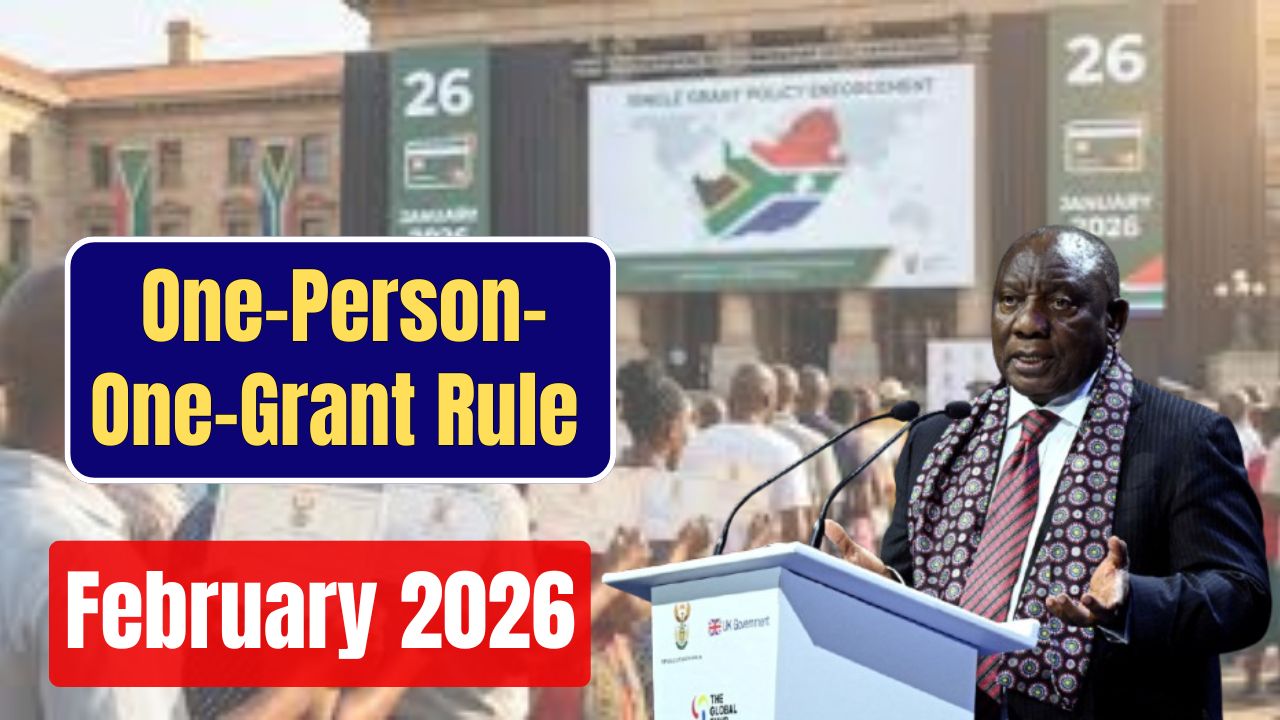
Effective February 5, 2026, South Africa will start utilizing its nationwide ‘One-Person-One-Grant’ system to change social security in a big way. This new measure is aimed at cutting double benefits to ensure that public funds already scarce are distributed evenly among eligible individuals so as not to be terribly unfair at the end of the day.
Why the Reason About the One-Person-One-Grant Ruling?
Revenue authorities reportedly pointed to escalating grant expenses, double/multiple claims, and system inefficiency as some of the reasons for this move. By such a measure officials deem as proactive, applicants will receive one social assistance grant, minimizing the advantages that come from misuse and loss through default targeting a pass-up household.
How They Will Actually Give Effect to the New Rule
People cannot receive more than one principal grant at a time beginning the decretive date. Therefore, individuals eligible for more than one grant type would all run for some level of competition, where eligibility rules and order of preference will determine which grant stays.

What Effect on Grants Will Ocur?
The rule applies to grants based on income and junior or seniority assistance as well as supplementary grants. Although some forms of supplementary help might be available on an “as needed” basis, one person will no longer be able to receive multiple primary grants.
What Happens to Beneficiaries with More than One Subsidy Grants While Implementing This Rule?
Presently, those beneficiaries who are being given more than one qualifying grant will possibly be under review. One and only one grant will be kept active; the eligibility of others in the group will be questioned, keeping with the guidelines under the new scheme of things. Such individuals are said to have been sent letters of being processed even before anything takes force.

This is not an ideal one-size-fits-all approach because, at a household level, if one person is considered eligible to participate in a programme, there should be at least one grant that can be given among eligible and qualifying household members faced with changes in perilof potential loss of livelihood.
Verification and Data Matching Under the New Model
Enhanced data matching across government databases will be used to enforce the rule. Identity numbers, income records, and grant histories will be cross-checked to ensure no duplication and compliance from February 2026.

Why the Grants May Be Suspended or Adjusted
The suspension may occur if the duplications are found while requesting for eligibility changes, or if the mandatory information is not updated. To avoid these unnecessary difficulties, the beneficiaries are being advised to maintain fairly consistent personal particulars.
What the Beneficiaries Should Do Before 05 February 2026
Grantees are requested to review the status of their grants, confirm eligibility, and then respond to official communications received without much delay. Taking action early prevents confusion and the sudden cessation of funds when the rule becomes operational.

Perceived Concerns and Comments Over the New Rule
While there are many people who support this as equality, there are also some concerns about the vulnerable individuals who depend on their multiple support. Agencies have come out to announce that there will be safety nets to save these high-risk cases through alternative means of support.
What Will the Rule Change about Social Grants in the Future
The One-Intimated Immigration Grant has signaled a movement of grant management into what might be seen as a tightening regime. Throughout the process, one can only expect increased monitoring activities by firstly promoting the management of strategic objectives consistent with program priorities.